
Hair Restoration in St. Charles
Hair Restoration
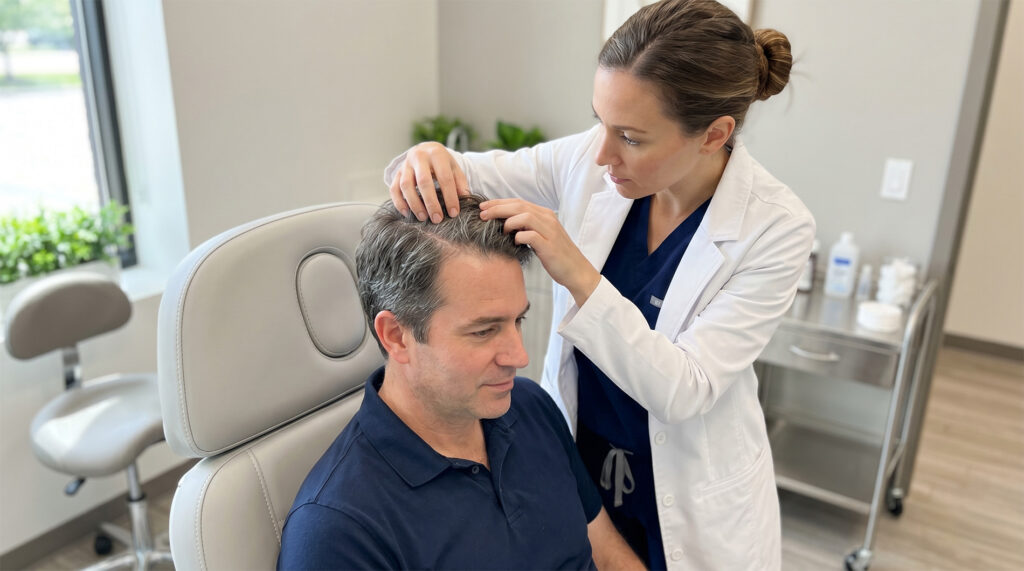
Hair Restoration in St. Charles, Illinois
We help you regain thicker hair. We cover non-surgical hair restoration and thinning hair treatments here. Schedule a scalp check to review your available options today. Our medical spa offers safe methods for natural hair growth.
What is the process for Hair Restoration?
Book a scalp exam at our medical spa.
Review your specific hair loss patterns.
Choose a non-surgical treatment plan.
Attend your scheduled therapy sessions.
Follow our simple at-home scalp care routine.
Watch for natural hair growth over several months.
Determine Your Eligibility for Hair Restoration Treatments
Men and women in St. Charles face thinning hair daily. We evaluate your scalp to understand your unique shedding patterns. We help you find out if active hair follicles remain on your head. This step decides if non-surgical methods will work for you.
Hard water in the Fox River area can stress your hair. Mineral buildup often makes existing hair look flat or weak. We check for these local environmental factors during your visit. Our team creates a clear plan based on your exact scalp condition.
Non-Surgical Hair Restoration Methods That Actually Work
Local professionals want thicker hair without major invasive surgery. We offer treatments that require no scalpels or stitches. We stimulate your scalp to grow thicker and fuller hair over time. These targeted methods wake up dormant follicles naturally.
These treatments fit easily into a busy St. Charles schedule. You can complete a session during a long lunch break. You bypass the long healing times required by traditional surgical transplants. We focus on natural stimulation for gradual, steady hair improvement.
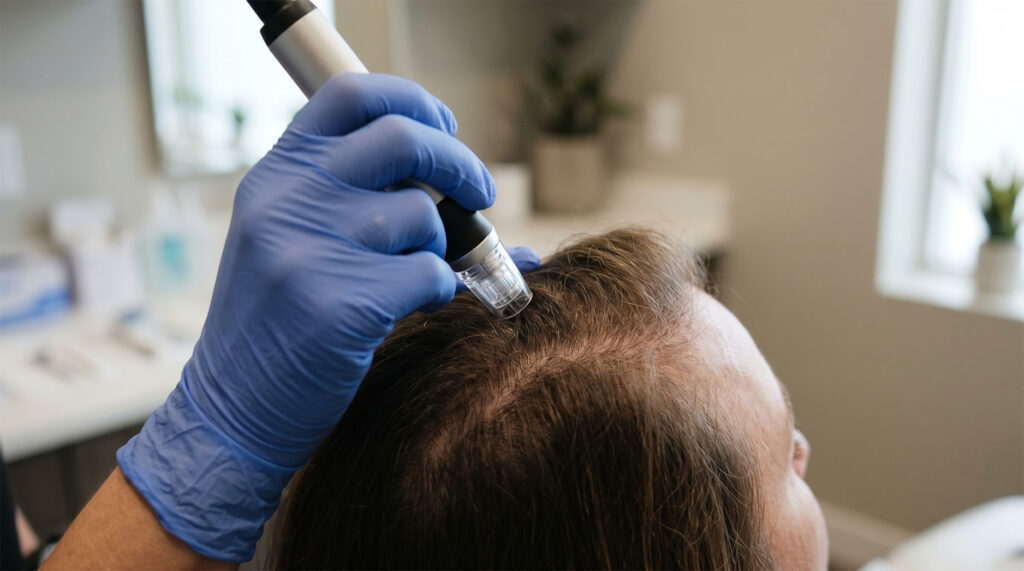
Hair Restoration in St. Charles
Prepare Your Scalp for the Treatment Process
Patients must clean their scalp before visiting our clinic space. Wash your hair thoroughly with a gentle shampoo at home. Proper prep helps the treatment absorb into your skin well. Clear pores allow the stimulation to reach your hair follicles directly.
Avoid wearing tight hats during the cold St. Charles winter beforehand. Heavy beanies can trap sweat and block your hair follicles. Arrive at our medical spa with dry, unstyled hair. This allows our team to start your restoration session right away.
What to Expect During Your Recovery Time in St. Charles
Active residents want to return to their work duties quickly. Our non-surgical methods require zero mandatory bed rest. You can expect mild scalp redness that fades in just a few days. Most patients report no interruption to their normal daily habits.
You can walk around Downtown St. Charles the very next day. The treated area might feel slightly warm to the touch. You simply follow our basic aftercare instructions at home. We monitor your healing process closely to keep you comfortable.
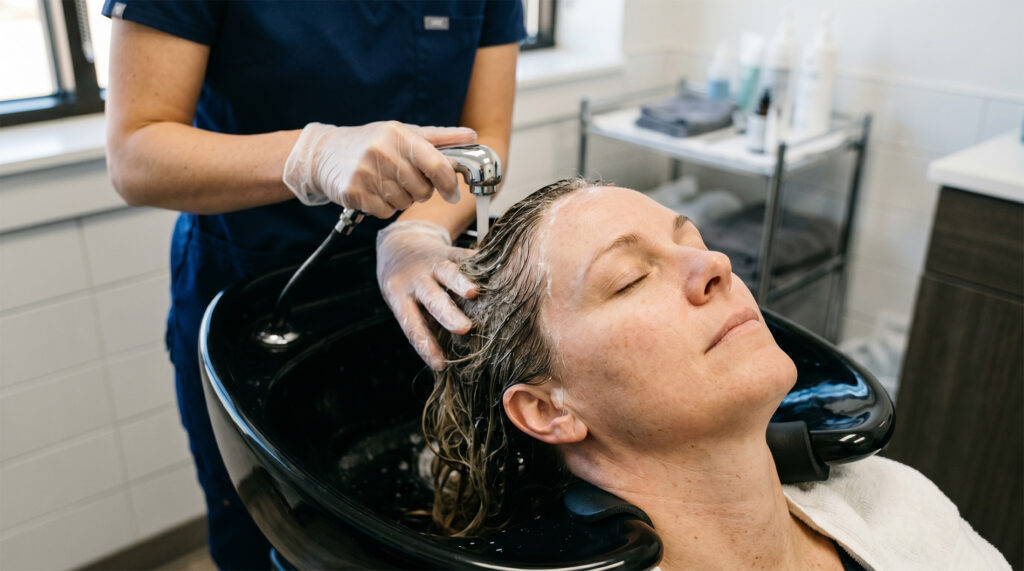

Maintain Your New Hair Growth After Complete Treatment
Patients in St. Charles want lasting results from their sessions. We guide you on the best ways to protect your investment. Keep your new hair strong with proper daily care routines. We recommend specific shampoos that support healthy, thick hair follicles.
Protect your scalp from the strong summer Illinois sun exposure. Wear a loose hat when spending long hours outside. Consistent care helps you maintain your new volume for years. We schedule follow-up checks to track your ongoing hair health.
Frequently Asked Questions
Patients report only mild discomfort during these non-surgical scalp treatments. Our medical team works to keep you comfortable during the visit.
Your medical spa provider will suggest a specific session count. We base this treatment plan on your personal hair loss levels.
Yes, the process stimulates your own natural hair to grow back. Your new growth blends perfectly with your existing hairline.
Mild redness and slight scalp sensitivity are the most common effects. These minor issues usually disappear within 24 to 48 hours.
Non-surgical options stimulate your existing active follicles to grow hair. Transplants surgically move hair from one body part to a bald area.
Non-surgical methods work best if you still have active hair follicles. Completely bald areas usually require a surgical transplant approach.